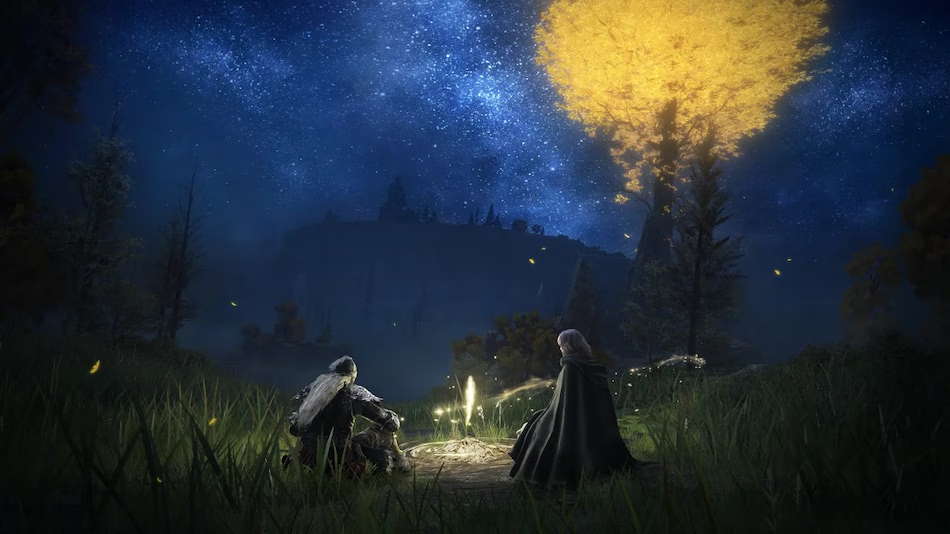
FromSoftware’s epic fantasy RPG, Elden Ring, took home the Game of the Year award at The Game Awards 2022, held earlier today, fending off stiff competition from the action-adventure masterpiece God of War Ragnarök by Santa Monica Studio. Other notable contenders for the industry’s highest honor this year included Horizon Forbidden West, A Plague Tale: Requiem, Stray, and Xenoblade Chronicles 3; however, the ultimate showdown came down to the PlayStation-exclusive God of War Ragnarök and Elden Ring. To my delight, the latter emerged victorious—a well-deserved win. Both titles are true masterpieces, representing the pinnacle of modern video games, yet only one truly captures the very essence of the medium.
At one point, it seemed as though God of War Ragnarök—the most-nominated title at The Game Awards 2022—might sweep the board. Before the main ceremony even began, Ragnarök had already secured six awards, including Best Narrative and Best Performance. Of course, award shows are often subject to the “recency effect” (a phenomenon that frequently influences outcomes—much like the dynamics seen during the Oscars season). While Ragnarök was released just last month, Elden Ring arrived back in February. Despite Ragnarök’s stellar performance, human memory can sometimes be deceptive. In the end, FromSoftware walked away with the night’s two most significant honors—Game of the Year and Best Game Direction—capping off a spectacular year for the Japanese developer.
Elden Ring and God of War Ragnarök: Approaches to the Open World
Between God of War Ragnarök and Elden Ring, the latter pushes the medium into entirely new territory. In recent years, the open-world genre has faced significant criticism—yet Elden Ring has completely subverted it, reshaping the genre on its own terms. By casting off the typical constraints—eschewing objective markers, an endless clutter of map icons, and a litany of hollow, perfunctory side activities—Elden Ring truly takes the open-world concept to its absolute limit. While other games have experimented with similar design philosophies—most notably Nintendo’s The Legend of Zelda: Breath of the Wild—Elden Ring goes even further. Where Breath of the Wild rewards the act of exploration, Elden Ring makes exploration itself the reward.
Take the map in Elden Ring as an example. In most open-world games, the map is not an accurate representation of the area the player is exploring; rather, it functions merely as a to-do list—conveying little more than, “Go here, do that; now head over here, and do it all again.” The map in Elden Ring, however, encourages—or perhaps even demands—that players examine it closely. You might find yourself scrutinizing the rock formations to the north of your current position, or the ruins to the west. There are no icons on the map explicitly telling you what lies in those spots, yet you develop an intuitive sense that something worthwhile awaits you there.
This is a true rarity in video games. Few titles dare to invite players to embark on their own personal adventure without rushing to act as a guide. Take Horizon Forbidden West, a nominee for Game of the Year: this open-world adventure never quite trusts the player with full control. Its countless map icons hold the player’s hand, steering them toward every last corner—a design choice that diminishes the enjoyment of an otherwise solid game. (It’s worth noting, too, that while God of War Ragnarök isn’t a fully open-world game, it does feature a map; yet, throughout my playthrough, I barely used it—for me, it served as nothing more than a decoration.)
Elden Ring and God of War Ragnarök: Storytelling
Elden Ring and God of War Ragnarök represent two polar opposites in terms of video game narrative styles. Ragnarök, which won the award for Best Narrative at The Game Awards, delivers a compelling story—one that is deeply moving and emotionally resonant. The game explores complex themes such as fatherhood and personal growth, while delving into concepts of prophecy and fate, ultimately bringing this Norse saga to a conclusion reminiscent of a Hollywood blockbuster. It is a good story, yet it remains somewhat conventional.
Ragnarök features one of the best game scripts of the year, yet its approach to storytelling differs little from that of a film or a novel. It takes players on a journey while consistently denying them the reins—a stark contrast to where the true magic of video game narrative lies. It is player agency that sets video games apart from other art forms. Elden Ring excels in this regard, empowering players to author their own stories. While the game does contain a predefined narrative thread—unspooled through cryptic item descriptions and fragmented bits of lore—curious players can always turn to YouTube to uncover what they might have missed. Yet, what truly leaves an indelible mark are the stories you forge for yourself as you traverse the “Lands Between.”
This is not to say that traditional modes of storytelling are inferior. Look at narrative-driven titles like The Last of Us or A Plague Tale: Requiem (the latter of which was also a Game of the Year nominee). These games tell unforgettable stories—yet it is the games that provide players with a blank canvas—allowing them to exercise their own imaginations—that truly reveal the potential of gaming as a unique art form, one that neither film nor literature can replicate.
Some of my fondest gaming memories come from playing as a mercenary in the wasteland in Fallout: New Vegas, or shaping my own legend through my actions and decisions across the Mass Effect trilogy. In Elden Ring, you might choose to be a valiant knight escorting maidens through a perilous wilderness, or perhaps a dashing rogue conquering both beasts and beauties. Or, if you’re skilled enough, you could even play as a completely naked character wielding a massive club, smashing the heads of the game’s deadliest bosses. The choice is entirely yours.
Elden Ring vs. God of War Ragnarök: Which is the true Game of the Year?
To be fair, part of this comes down to the very nature of role-playing games like Elden Ring. I’m not dismissing God of War Ragnarök simply because it isn’t an RPG; as I’ve mentioned, it’s an entirely different kind of game. It meticulously crafts an experience that perfectly blends exhilarating gameplay with profound emotional depth, demonstrating remarkable flexibility within its impressive open-world combat framework. Elden Ring, however, takes a different path, inviting players to discover treasures for themselves. If Ragnarök is defined by its grand spectacle, Elden Ring is defined by its restraint—a quality it employs almost as a core gameplay mechanic—making it a quintessential example of the genre.