Two years on, the hit-and-run provision of the Bharatiya Nyaya Sanhita (BNS) remains effectively inoperative.
More than two years after the Bharatiya Nyaya Sanhita (BNS) replaced the Indian Penal Code, the provision intended to penalize drivers who flee the scene after causing a death through reckless driving remains on the books but is, in practice, a dead letter. Two recent, high-profile traffic accidents have resulted in starkly different criminal charges: one in September on Golf Course Road in Gurugram, where a motorcyclist named Siya was struck and killed, and another in October near Nedumbassery, Kerala, where a speeding Mini Cooper struck and killed three young people. The significant disparity in the criminal charges filed in these two cases exposes the legal vacuum created by the ineffectiveness of this provision. In the Gurugram case, after reviewing surveillance footage, police added a charge of attempted murder; meanwhile, in Kerala—given that Section 106(2) of the BNS remains effectively dormant—police registered the case as culpable homicide.
The Election Commission has ordered a state-wide review of all additions to and deletions from the electoral rolls in Uttar Pradesh, following the implementation of special election procedures.
The Election Commission of India (ECI) has mandated a review of the electoral rolls across all 403 constituencies in Uttar Pradesh, to be conducted after the conclusion of the Special Intensive Revision (SIR) on April 10. This review will be carried out using Form 6 (for registrations), Form 7 (for deletions), and Form 8 (for corrections), all of which are processed via a computer-assisted entry system. This directive follows the discovery of irregularities in the electoral rolls of several constituencies in Uttar Pradesh, most notably in districts such as Pilibhit and Azamgarh.
In his memoir, Justice Kaul states that the process for scheduling cases was altered during Justice Lalit’s tenure as Chief Justice.
Previously, more than 1,000 cases in the Supreme Court had been flagged as “sensitive,” effectively excluding them from the regular hearing schedule. In his memoir, Fearless and Free, former Supreme Court Justice Sanjay Kishan Kaul writes that this practice highlighted the Chief Justice of India’s control over the allocation and scheduling of cases—a power that can determine which matters are ultimately heard. According to Kaul, Justice Uday U. Lalit changed this practice during his brief term as Chief Justice.
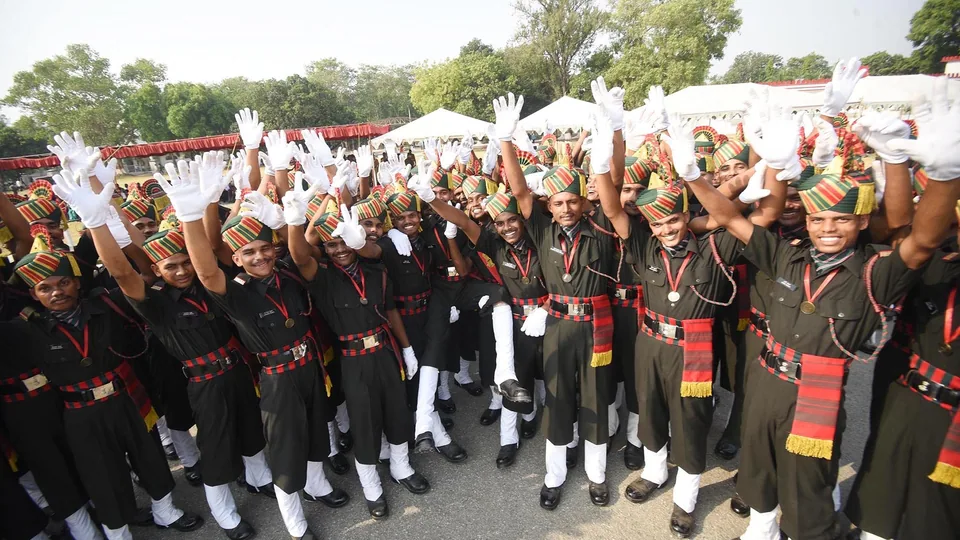
The first cohort of 18,300 “Agnipath” recruits will be discharged by December 31, as their four-year service term comes to an end.
According to officials familiar with the matter who spoke on Sunday, the first group of over 18,000 “Agnipath” recruits will complete their four-year tenure and be discharged by December 31, at which point they will begin seeking opportunities for a second career. The officials stated that the three branches of the armed forces—the Navy, the Air Force, and the Army—will begin discharging 75% of this initial cohort in a phased manner starting in mid-November.
HT Exclusive: A.R. Rahman Amused by Criticism of Ramayana Songs
When A.R. Rahman and Hans Zimmer were brought on board to compose the music for Nitesh Tiwari’s Ramayana, many hailed it as a match made in heaven. Upon the announcement of the film’s title, the initial musical score was met with widespread acclaim. However, the songs themselves have since drawn a mixed response—eliciting both criticism and praise. In an exclusive interview with the Hindustan Times, Rahman discusses the creative process behind the Ramayana score, explains why he set aside his usual policy against collaborations to work with Hans Zimmer, and shares his thoughts on the public’s reaction.